The best way to study for the CDL permit is to follow a structured plan, not to sit down with a state manual three days before your appointment, read it like a novel, and hope something sticks. The written knowledge test covers a lot of ground: general knowledge, vehicle inspection, cargo handling, and potentially air brakes or combination vehicles on top. No amount of last-minute skimming covers that ground well, and the 80% passing threshold leaves less margin for error than many applicants expect.
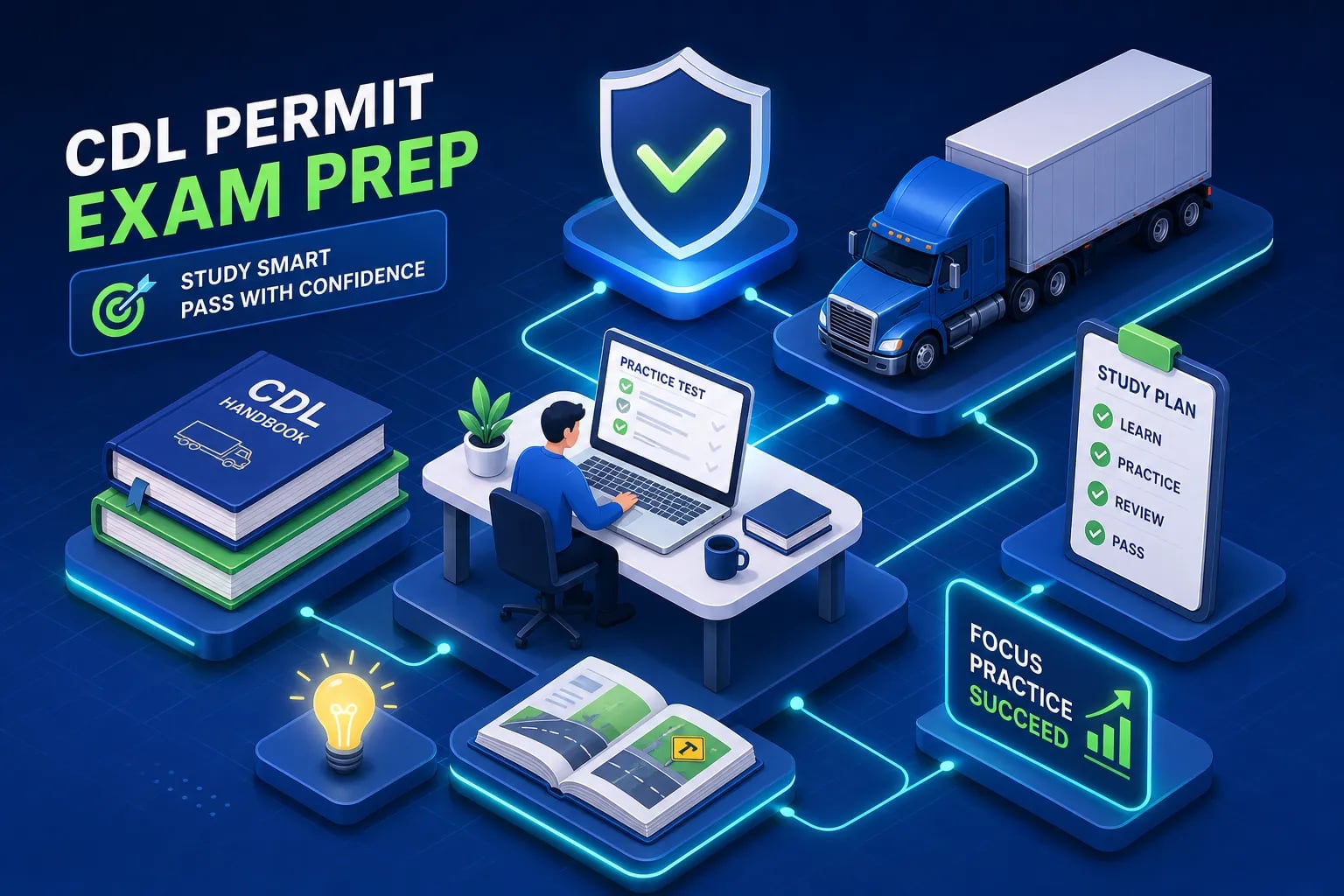
This article gives you a step-by-step study system built around methods that actually improve retention, a full 30-day plan you can follow regardless of experience, a compressed 2-week option if you're working against the clock, and clear guidance on choosing the right practice tools. The plan below assumes you want to pass on your first attempt, and everything here is designed around that goal.
Why So Many CDL Permit Applicants Fail the Written Test
The national first-time pass rate for the CDL general knowledge test is estimated somewhere between 50% and 75%, depending on the state and preparation level. That range is wide, but it tells you one thing clearly: a significant portion of candidates walk in underprepared. Many of them aren't underprepared because the material is beyond them. They're underprepared because they didn't have a plan.
The CDL knowledge test isn't a trivia quiz. It tests applied understanding of federal regulations, vehicle systems, and hazard decisions. Data from CDL prep platforms across several states shows that topics like fines and penalties, weight distribution, load inspection, tires and wheels, and mirrors and visibility carry miss rates between 47% and 61%. These aren't obscure topics; they're in every state CDL manual. Candidates often miss them due to weak study habits, single-pass reading rather than repeated retrieval practice.
A structured CDL permit study plan changes the outcome because it forces sequence, paces your exposure to material, and builds in review before new information buries the old. Candidates who study over 3 to 4 weeks with regular self-testing consistently outperform those who cram. The method you use matters as much as the hours you put in.
What the CDL Permit Test Actually Covers
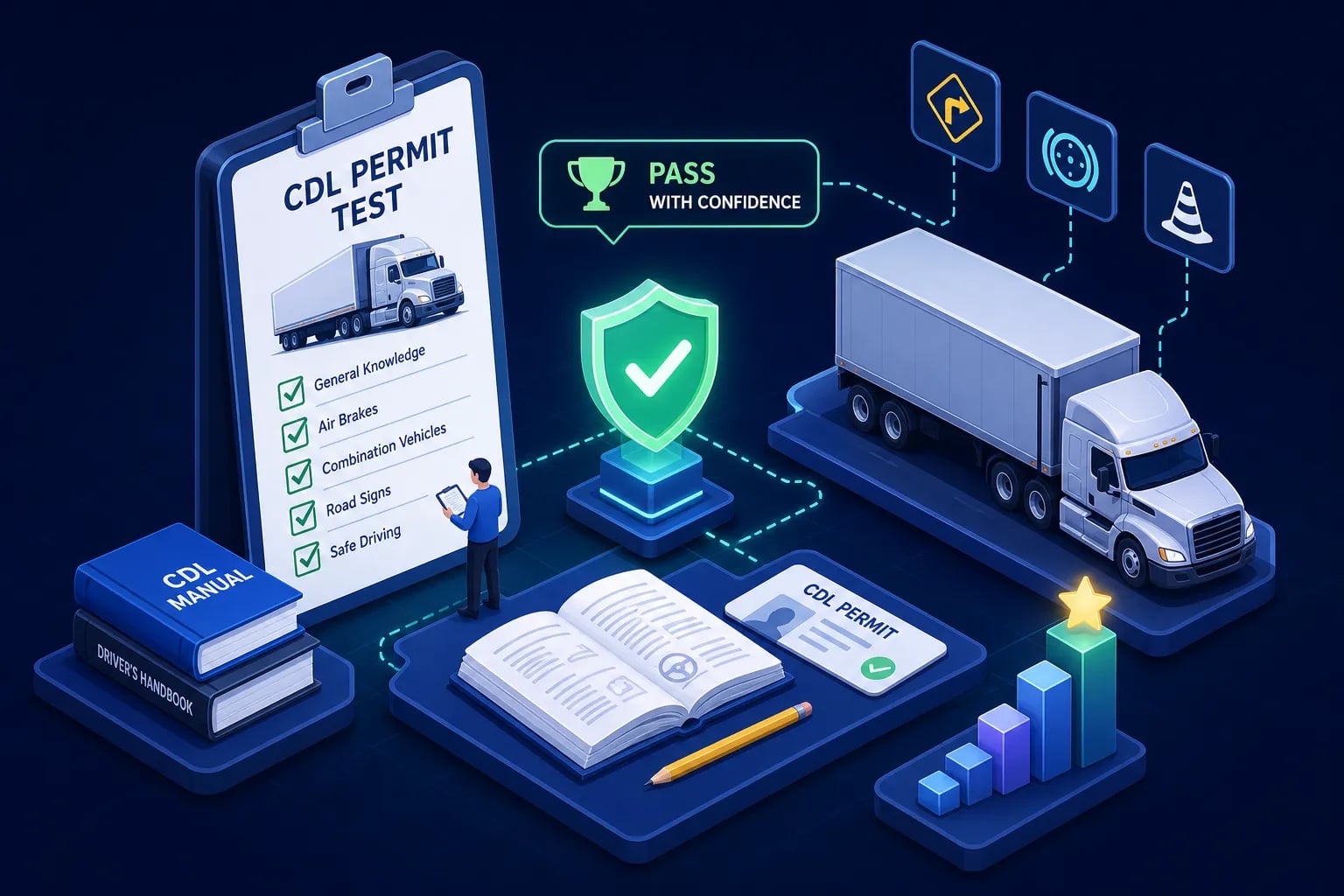
General knowledge is the base test every CDL candidate takes, and it's the longest section to prepare for. It covers vehicle inspection procedures, basic vehicle control, space management, safe following distances, hazard recognition, cargo securement rules, emergency procedures, and federal driving regulations. Most states draw their questions directly from the FMCSA federal CDL handbook, so the content is consistent across states even if the exact wording varies by manual.
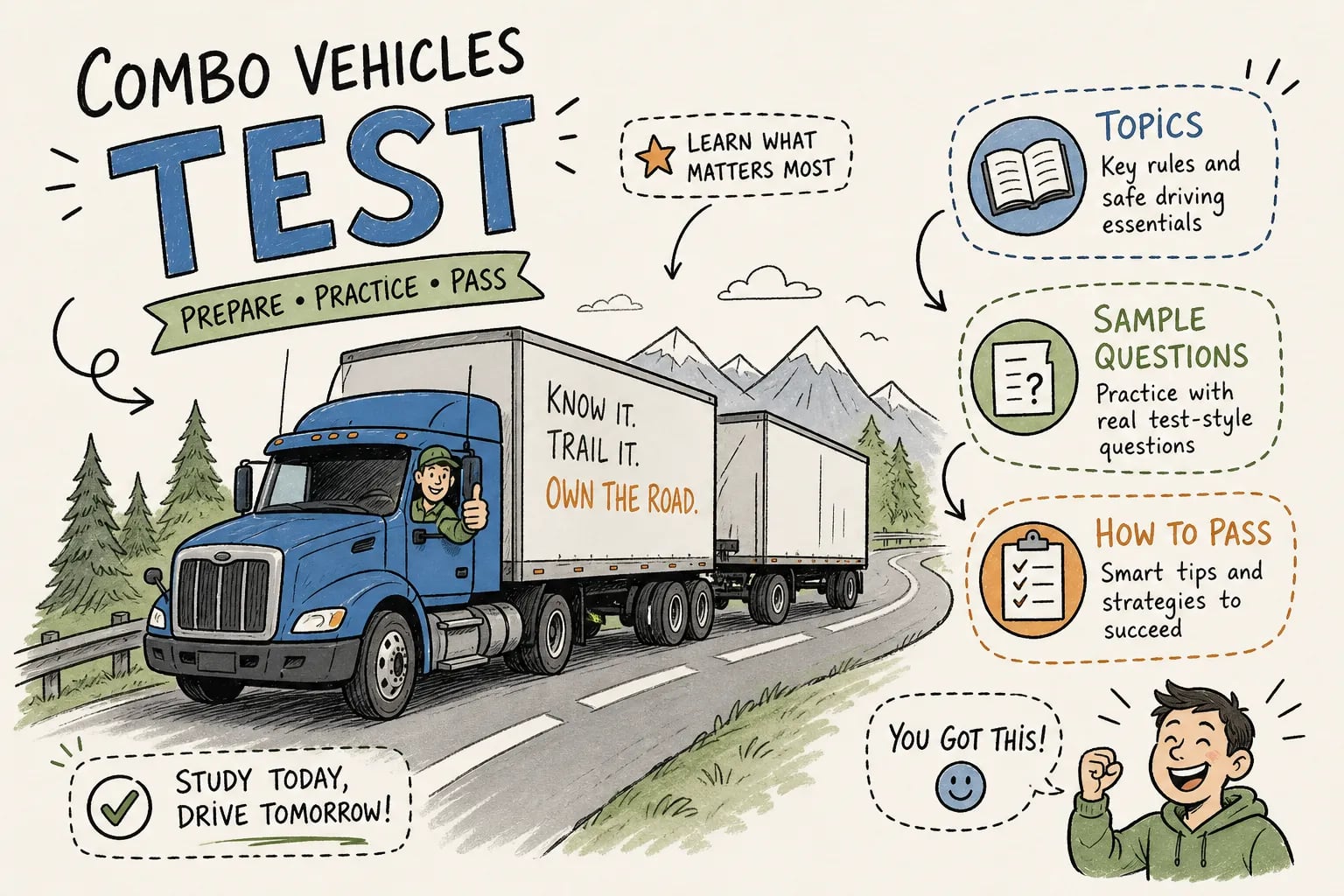
If you plan to operate a vehicle with air brakes or a tractor-trailer combination, you'll need to pass those knowledge tests separately. The air brakes section covers system components, pressure gauges, warning devices, brake failure recognition, and the pre-drive checks required before every shift. The combination vehicles section covers coupling and uncoupling, fifth wheel and kingpin systems, rearward amplification, jackknife prevention, and trailer stability. These are common trouble spots for many candidates, because they require understanding how systems work together, not just isolated facts.
Hazardous materials, tanker, doubles and triples, passenger, and school bus are each their own written test with their own study requirements. You only need to sit the endorsements that match the vehicle you plan to drive professionally. Study endorsement material after you've locked down general knowledge. Adding endorsement content too early splits your focus and weakens performance on both.
States follow federal minimums, but some add their own requirements. Texas includes a special requirements test, and some states impose waiting periods between failed attempts. Your state CDL manual is the final word on what you're being tested on and should be your first reference before anything else. Download or pick up your state-specific manual before you build a study schedule.
The Three Study Methods That Produce Real Retention
Spaced repetition means spreading your study across multiple shorter sessions over days or weeks rather than cramming it all into one long block. Research on learning retention is consistent: material reviewed at spaced intervals is retained significantly longer than material reviewed once for the same total time. A published meta-analytic review found a strong benefit of spaced retrieval practice over massed practice, with meaningful effect sizes on delayed retention tests. For CDL permit prep, that means scheduling 30 to 45 minute daily sessions instead of three-hour weekend blocks.
Active recall means testing yourself on material rather than re-reading it. When you re-read a page, it feels familiar and your brain interprets that familiarity as understanding. When you try to retrieve an answer cold, your brain actually works, and that effort is what builds memory. Flashcards, self-quizzing, and practice tests all force active recall. Highlighting a handbook does not.
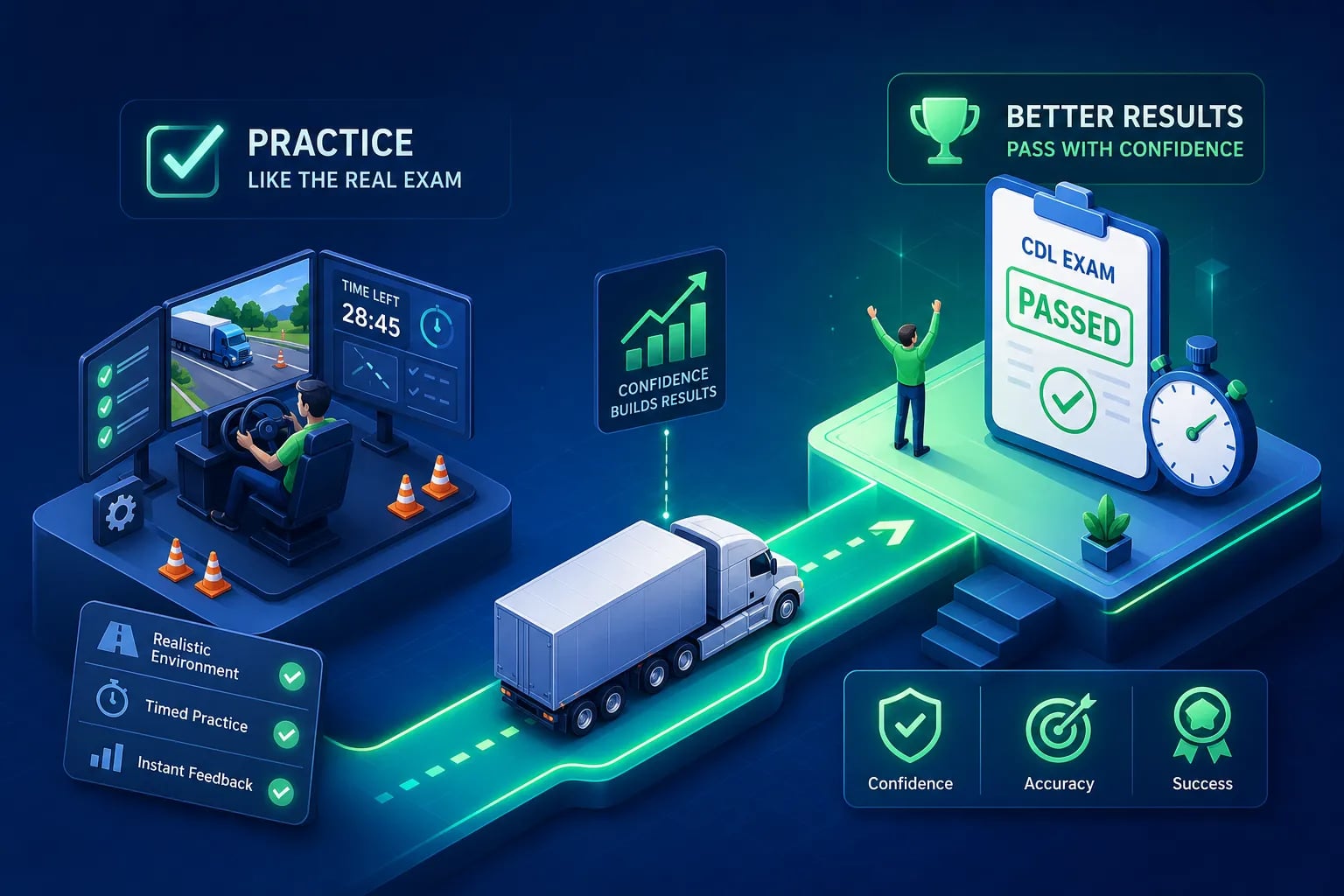
Timed practice exams are your most realistic readiness check. They replicate the pressure, the question format, and the time constraints you'll face at the DMV. The key is what you do after: every question you missed is a gap that needs to be closed. Review the explanation, go back to the handbook section, and flag it for re-drill. A practice test used only as a score check wastes most of its diagnostic value.
Best Way to Study for the CDL Permit: Your 30-Day Plan, Week by Week
Spend the first week on your state CDL manual and general knowledge material. Read the relevant chapters, but stop after each section and quiz yourself on what you just covered. Keep your sessions to 30 to 45 minutes and repeat daily. By the end of week one, you should be able to answer basic questions about vehicle inspection, space management, and safe driving regulations without looking anything up.
Week two is when you build air brakes and combination vehicle knowledge, if your CDL class requires them. These are system-heavy topics, and understanding how components work together matters more than memorizing isolated facts. Take topic-specific practice quizzes every day, not just at the end of the week. Track which questions you're missing and revisit those areas the following day before moving forward.
Add endorsement topics in week three, keeping those sessions separate from your general knowledge and air brakes review so you don't blur the material. Run a full-length practice exam at the end of week three to identify any remaining weak areas. The goal isn't to pass that practice exam perfectly; it's to see where gaps still exist before the final week.
Week four is for simulated exam conditions and targeted remediation. Run full timed exams every other day. On the days in between, drill the specific topics you're still missing. Stop adding new material four days before your scheduled appointment and shift entirely to review and simulation. Walk in knowing your weak spots have been addressed, not avoided.
The 2-Week Version for Candidates Short on Time
Two weeks is enough time to prepare for the CDL permit test if you commit to daily sessions and study smart. The compressed plan prioritizes general knowledge in days 1 through 5, adds air brakes and combination vehicles in days 6 through 9, layers in any endorsement material in days 10 through 12, and reserves the final two days for timed simulations and missed-question review only. You're looking at closer to 2 to 3 hours per day under this schedule, not the lighter daily load the 30-day plan allows.
In a two-week plan, there's less room for slow re-reading. Protect daily active recall practice and timed practice exams; those are non-negotiable. What you cut is leisurely review. Go directly to practice questions, identify what you don't know, then go back to the handbook for clarification on those specific points. This retrieval-first approach is less comfortable but significantly faster than reading first and testing later.
If you're scoring below 70% on full practice exams two days before your appointment, consider rescheduling. A retake fee is far cheaper than the time cost of another study cycle and another appointment wait. Retake fees vary by state, verify the current amount with your state DMV or DPS before your appointment, since costs and waiting period rules differ. The fees themselves are manageable; the lost time is the real cost. Use any extra time to run more simulations and close the gaps that practice tests are surfacing.
How to Use CDL Practice Tests to Your Full Advantage
Most candidates take a practice test, see their score, and move on. That approach wastes most of the value. A practice test isn't just a score; it's a diagnostic. Every wrong answer tells you exactly where your knowledge has a hole. If you're not reviewing every missed question against your state CDL manual or handbook, you're using practice tests as a confidence check instead of a study tool.
Start with topic-specific practice quizzes before running full simulated exams. Drilling by topic forces focused attention on one knowledge area at a time, which builds a more solid foundation than jumping straight into mixed-topic tests. Once you're consistently scoring well on individual topics, general knowledge first, then air brakes, then combination vehicles, move to full-length timed simulations to practice working under real exam conditions.
CDLTest360 is built around exactly this workflow. The platform offers topic-specific quiz modules so you can drill general knowledge, air brakes, or combination vehicles separately before mixing everything together. A missed-question re-drill feature automatically isolates the questions you answered incorrectly and re-tests you on those. When you're ready for simulated exam conditions, timed practice mode replicates the 50-question, 80%-threshold format of the actual test. Everything runs in one platform, so you're not bouncing between a state manual PDF, a random flashcard app, and a separate quiz site. You can start a free trial right away with no account required.
Adding Endorsements to Your Study Plan Without Losing Focus
Every CDL candidate sits the general knowledge test, so that material has to be solid before you add anything else. Jumping into air brakes or hazmat content before you've mastered general knowledge is one of the fastest ways to overload your study sessions and underperform on both. Build the base first, then layer in endorsement content in the sequence described in the 30-day plan.
Air brakes and combination vehicles connect directly to general knowledge topics. Vehicle systems, inspections, and safe operation principles overlap across all three sections. That overlap actually helps: once you understand general inspection principles, air brake system checks are easier to absorb. Study these sections in the same week so the connected concepts reinforce each other instead of competing for mental space.
Hazmat is the most regulation-heavy endorsement and takes the most dedicated study time. If hazmat is part of your plan, give it its own week rather than trying to combine it with combination vehicles or tanker material. The placarding rules, shipping paper requirements, and emergency response procedures are specific and need repetition to stick. For shorter endorsements like doubles/triples or tanker, 3 to 5 days of focused drilling is usually enough after your general foundation is solid. The key is not to rush endorsement study onto an already full week of core content.
The Final 7 Days Before Your Permit Test
In the last week before your test, your goal shifts from learning new material to consolidating what you've already covered. Run full-length timed simulations every other day. On the days between simulations, review only the topics and questions you're still missing. Do not introduce new material in the final 72 hours. Your brain needs time to consolidate what you've already studied, and adding new content right before the exam creates interference, not clarity.
Logistics matter more than most candidates realize, and ignoring them can cost you an appointment even when you're ready on the knowledge side. Know your testing location and how long it takes to get there. Check your state DMV's requirements for acceptable ID, permit fees, and any documentation you need to bring. Some states require proof of ELDT enrollment for certain CDL classes before you can sit the knowledge test, confirm that requirement with your state DMV well before your appointment date.
Confidence on test day comes from preparation, not pep talks. If you've followed a structured study plan, drilled your weak areas, and scored consistently above 80% on timed practice exams, you're ready. Read each question fully before selecting an answer. Flag anything you're unsure about and revisit it before submitting. The permit test is designed to assess working knowledge, not trick you. Candidates who prepare deliberately and test themselves regularly pass it.
Build the Plan, Work the Plan, Pass the Test
The best way to study for the CDL permit isn't a secret. It's a structured plan, the right methods, and consistent practice over time. Spaced repetition keeps material from fading before test day. Active recall builds real understanding instead of surface familiarity. Timed practice exams tell you exactly where you stand before you walk into the DMV.
Following the 30-day roadmap above, or the compressed 2-week version if that's your timeline, gives you a clear path from the state CDL manual to passing your permit test on the first attempt. Use CDLTest360 to run topic-specific drills, re-test on missed questions, and simulate exam conditions without cobbling together five different tools. State-specific CDL manuals are available inside the platform so your study content matches what your state actually tests.
The best way to prepare for the CDL permit is to treat it like the professional credential it is. CDL drivers who earn their license pass the same knowledge test you're preparing for right now. Build a plan, work it consistently, and pass. Your CLP permit is the first step toward a career that will pay you back for every hour you put into preparing for it.
{ "@type": "Article", "datePublished": "2026-09-23T11:02:00.028Z", "dateModified": "2026-09-23T11:02:00.028Z", "headline": "Best Way to Study for the CDL Permit Written Exam", "description": "The best way to study for your CDL permit is a structured plan, not last-minute cramming. Get a proven 30-day roadmap, study methods, and top practice tools.", "publisher": { "@type": "Organization", "name": "CDLTest360" }, "image": [ ] }