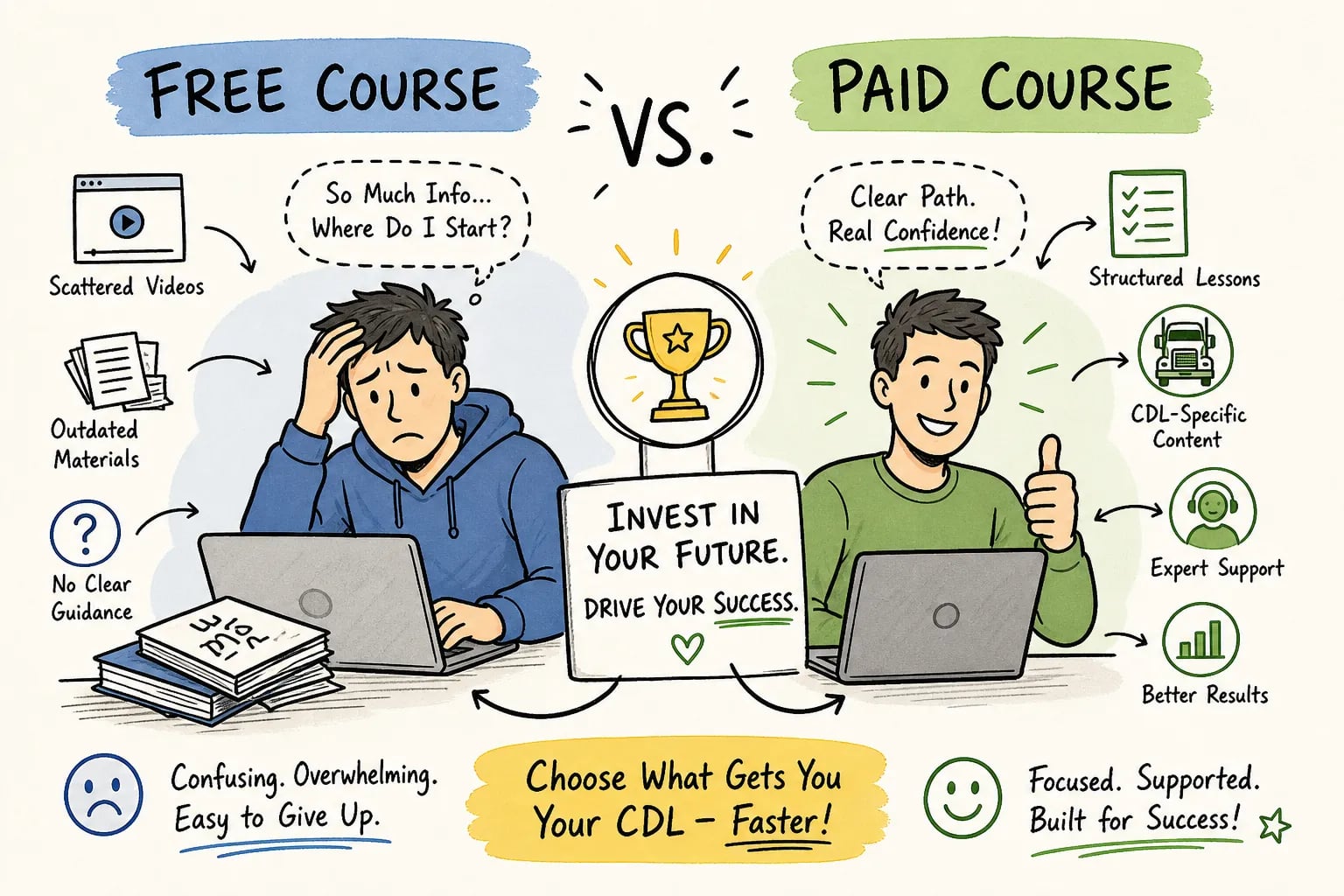
The CDL knowledge exam has a fixed passing threshold: 80% correct on a 50-question test. That's not a moving target, and the internet is full of free resources that make it tempting to skip paying for anything, YouTube videos, state DMV practice questions, the FMCSA handbook as a free PDF. Why pay for anything when all that exists? The honest answer is that a paid CDL study course offers structured, exam-aligned practice that free resources consistently lack. Choosing the wrong approach doesn't just cost you time. It costs you a retake fee, a delayed training start date, and sometimes weeks of income.
That said, a paid CDL study course isn't the right answer for every candidate on every timeline. Some people have the discipline, the time, and the reading background to work through free materials and pass on the first attempt. Others will spend weeks on manual reading and still freeze on exam day because they never practiced under actual test conditions. This article breaks down exactly what each option delivers, when paying makes sense, and where CDLTest360 fits into your preparation strategy. If you want to benchmark the difference before committing, CDLTest360's free trial requires no account and no credit card; you can start right now.
What free CDL test prep resources actually include
Free resources are a real option, not a trap. The FMCSA CDL handbook is the same source material the exam draws from, and it's publicly available at no cost. Several state DMV websites offer short practice question sets, and YouTube has walkthrough videos covering everything from air brakes concepts to pre-trip inspection procedures. For foundational general knowledge, road signs, and a high-level overview of cargo securement rules, these resources cover the content accurately.
The realistic strengths of free study materials come down to access to raw information. If you have eight or more weeks before your test date, a strong habit of self-directed study, and the patience to read a 200-plus page manual closely, free tools can serve as a legitimate starting point. Career changers who are methodical learners with no time pressure have used this path successfully. The content is there; the structure is not.
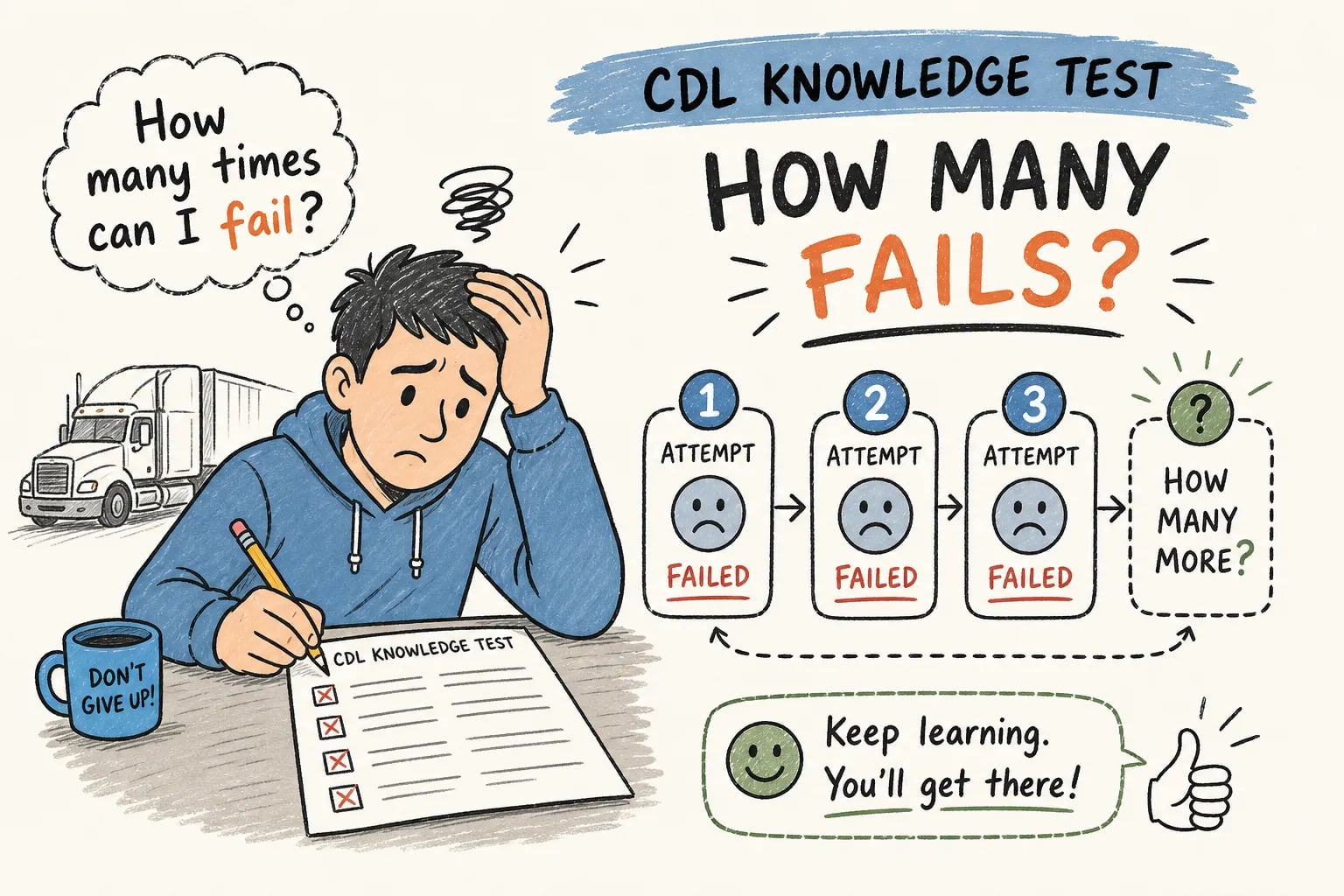
Where free tools consistently leave candidates exposed is in everything beyond content delivery. Many free resources lack timed exam simulation, missed-question isolation, and specialized pre-trip inspection phrase training. Sites like Driving-Tests.org do offer basic exam-style simulators, but adaptive question logic, missed-question drill loops, and component-level PTI phrase prompting are features that even most paid platforms skip. Reading that you should check the air compressor governor cut-in and cut-out pressure is not the same as answering a timed question about it under the same conditions you'll face at the DMV. The actual CDL general knowledge exam has a first-attempt pass rate of roughly 50 to 60 percent nationally, per FMCSA data. That number reflects the gap between knowing the material and performing under test conditions.
What a paid CDL study course adds to your preparation
The difference between free and paid CDL prep isn't primarily about content volume. The FMCSA handbook contains everything the exam covers. The difference is in how that content is practiced, reinforced, and retained under pressure. A quality paid CDL study course structures your preparation around the actual exam format instead of leaving you to simulate test conditions on your own.
Exam simulation and the missed-question drill
A proper timed exam simulation mode mirrors the real CDL knowledge test: 50 questions, 80% passing threshold, timed. That environment trains your pacing and exposes knowledge gaps you didn't know existed. The missed-question-only review loop goes further: instead of re-doing all 50 questions from scratch, you drill only the ones you got wrong, repeatedly, until you can answer each one cleanly. That's targeted remediation. It's the difference between spending three hours reviewing material you already know and spending 30 minutes on the specific concepts that would have cost you the exam.
The PTI phrase trainer: a feature many paid CDL study courses skip entirely
Pre-trip inspection wording is one of the most underestimated areas in CDL test preparation. The exam doesn't just test whether you know to check the brake chambers; it tests whether you know the exact language used to describe what you're checking. A PTI phrase trainer prompts you to recall component-by-component inspection wording, which is fundamentally different from reading a checklist once and hoping it sticks. Many CDL prep platforms, free or paid, don't offer this feature. CDLTest360's interactive PTI phrase trainer is designed to take candidates from simply knowing the pre-trip checklist to being able to perform it verbally under pressure.
Even employer-sponsored trainees need a strong paid CDL study course first
Many candidates researching paid CDL training options are also looking at employer-sponsored CDL courses from companies like Roehl Transport, Knight Transportation, and TMC Transportation. These company-paid CDL programs pay you while you learn: Roehl pays $616 per week during training, Knight Transportation trainees average $850 per week while with a trainer, and TMC Transportation pays around $500 per week. For a candidate with no cash to spare, that's a compelling path. But there's a critical step that comes before any training paycheck, and it's one carrier programs don't help you with.
The knowledge exam is your first barrier, not your last
Every carrier-sponsored CDL course and CDL apprenticeship program requires a valid commercial learner's permit (CLP) before training begins. Getting that CLP means passing the CDL general knowledge written exam at your state DMV, and depending on your CDL class, possibly additional tests covering combination vehicles, air brakes, or hazardous materials. No pass, no CLP. No CLP, no training slot, no training pay. The tuition-assistance CDL training program doesn't start the clock on your weekly paycheck until you clear that written test on your own.
What failing actually costs you when training pay is waiting
A failed written exam doesn't just cost you a retake fee, fees vary by state, so check your state DMV's schedule before you sit. It delays your entry into a program that pays you every week you're enrolled. For a trainee who would earn $616 per week through Roehl's program, a single week's delay from a failed written test can quickly exceed the cost of a 90-day prep platform. The math points clearly toward investing in preparation before sitting for the test. Carrier contracts also typically include 6 to 24-month work commitments with repayment clauses if you leave early, which means you need to enter the program ready to perform, not scrambling to catch up from day one.
How to decide if a paid CDL study course fits your timeline
Not everyone needs to pay for CDL prep, and saying so is more useful to you than a blanket recommendation. The honest answer depends on your timeline, your study habits, and how many knowledge areas you need to cover before your test date.
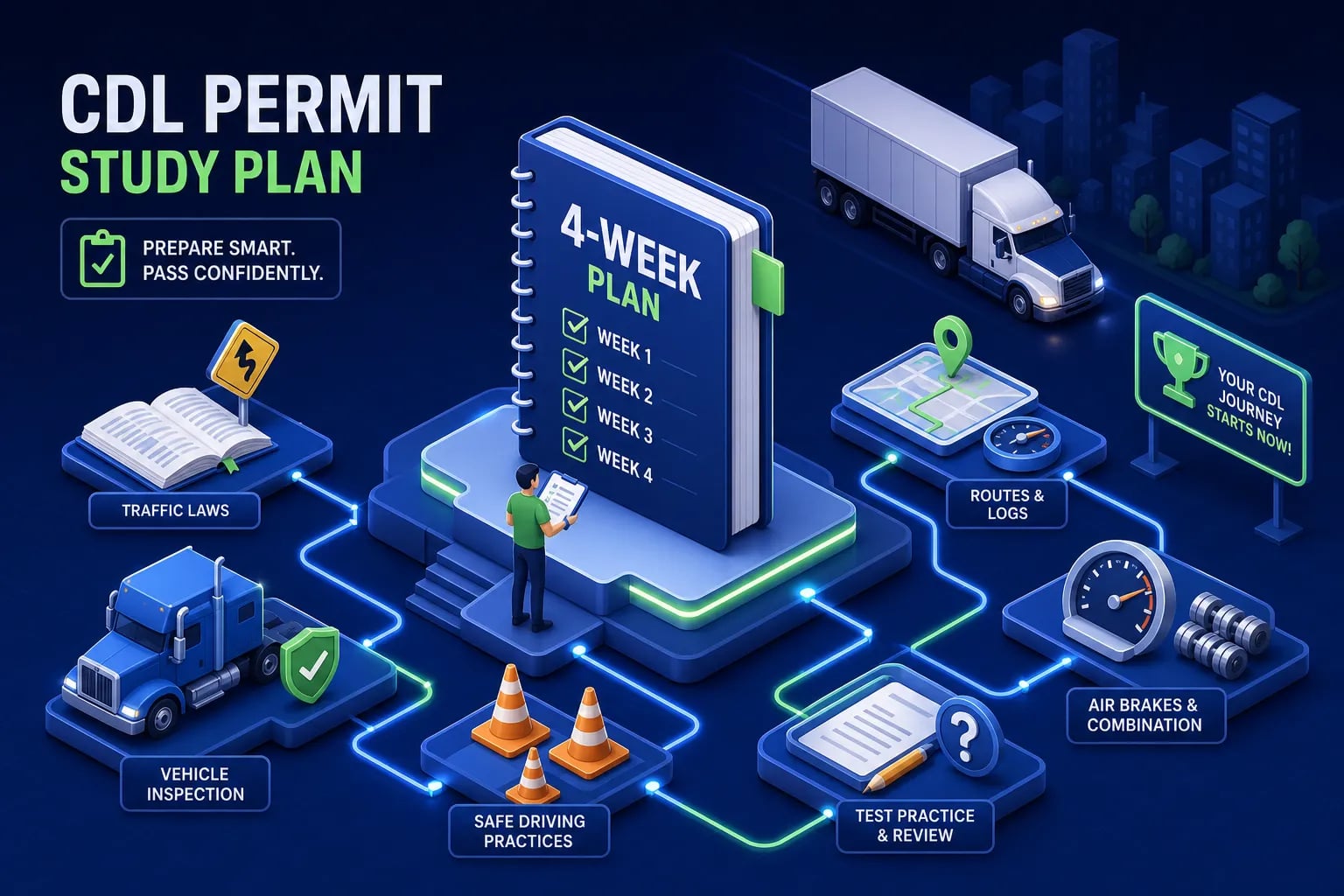
You can likely manage with free resources if you have eight or more weeks before your scheduled test, a consistent track record of self-directed study, and access to your complete state CDL manual. Candidates covering only the general knowledge section with a flexible schedule and no prior failures fall into this category. Free tools won't simulate the exam, but they'll give you the content foundation you need if you have time to work through the gaps on your own. Think of this guidance as a practical rule of thumb, not a guaranteed formula, every candidate's situation is different.
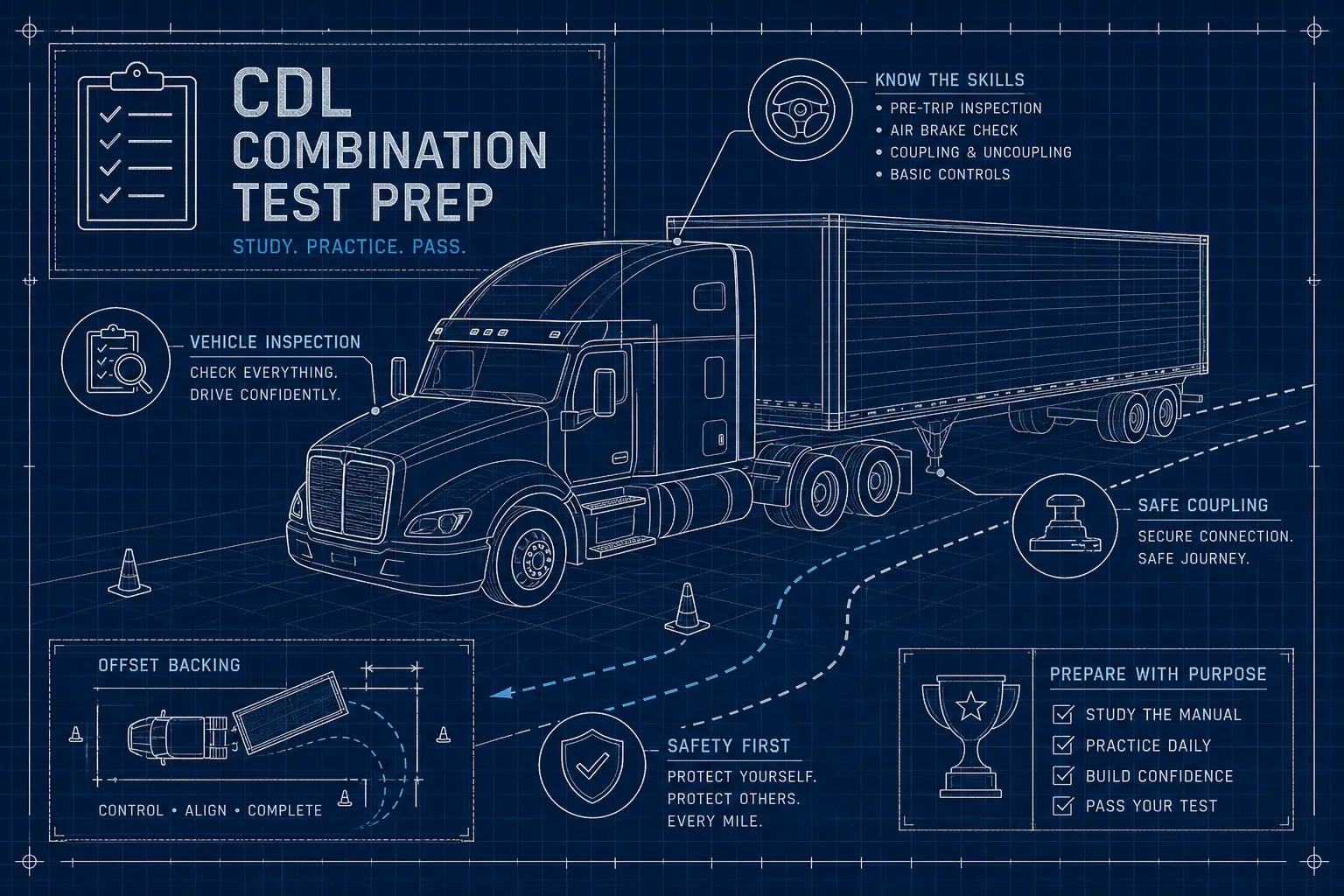
A paid study course tends to pay for itself when any of these conditions apply: your test is less than four weeks away; you've already failed the written exam once; you're covering multiple endorsements simultaneously, such as air brakes, combination vehicles, and hazmat; or you need pre-trip inspection wording drilled specifically, not just outlined. The CDL knowledge exam covers a substantial range of topics, including vehicle inspection, hazard recognition, cargo securement, driving conditions, fatigue management, and Hours of Service rules. Covering all of those efficiently through unstructured free study is possible but unlikely within a compressed timeline.
CDLTest360: what the platform includes and what it costs
According to CDLTest360's website, the platform is priced at $39.99 for a 90-day pass or $19.99 per month with no long-term commitment. For context, school-branded CDL prep kits and printed workbooks can run $50 to $150 with no adaptive features, no missed-question logic, and no timed simulation. You may pay more for a paper workbook than for three months of digital, exam-aligned practice on a paid CDL study course like CDLTest360.
What the platform actually includes at that price
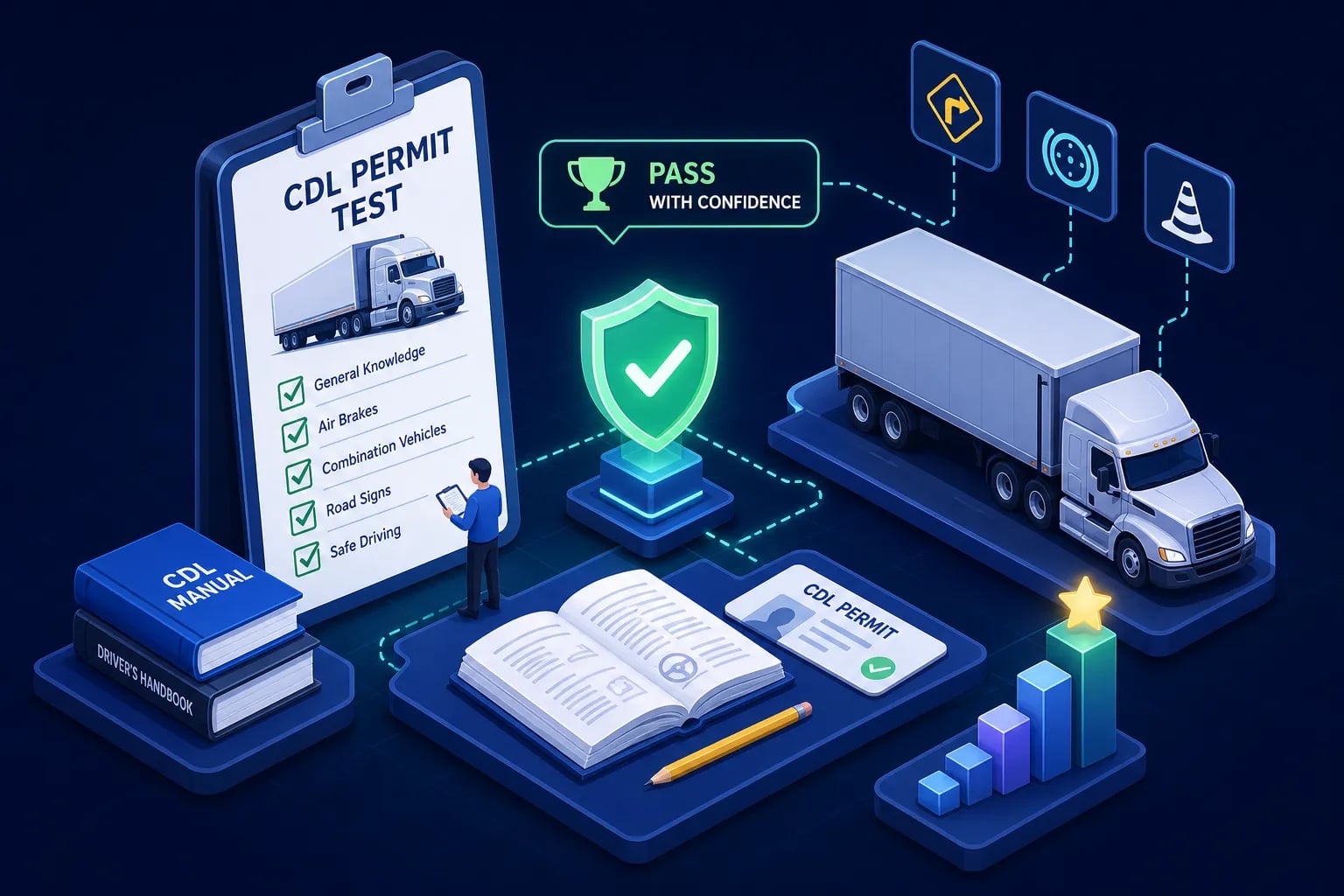
According to CDLTest360, the platform covers all major CDL knowledge areas with FMCSA-aligned question banks: General Knowledge, Air Brakes, Combination Vehicles, Hazardous Materials, and ELDT Theory. Each topic module runs in both practice mode and timed exam simulation mode, using the real 50-question, 80% passing threshold format. The missed-question-only drill loop isolates every question you answered incorrectly and re-presents them until you answer each one correctly, so your study time focuses on actual weak spots rather than reviewing content you already know. The PTI phrase trainer prompts exact inspection wording by component, a feature that many CDL prep platforms, free or paid, leave out entirely.
Why the pricing model fits real candidates
CDLTest360's vendor page indicates that no account is required to start the free trial. For paid access, there's no semester-long enrollment, no intake process, and no hidden fees. A candidate who needs six weeks of focused prep before entering a carrier program pays for six weeks and nothing more. The platform also offers state-specific CDL manuals for all 50 states, according to the vendor, covering the minor regional variations that fall outside the federal standard. The school dashboard feature allows CDL program administrators to manage student progress, assign question banks, and track class-wide readiness, making CDLTest360 a platform that scales from a solo candidate studying on a phone between shifts to a full institutional CDL training program.
The clearest path to your CDL knowledge exam
Free tools have real value. The FMCSA handbook is legitimate source material, and no quality prep program should ask you to ignore it. But access to information and the ability to perform under exam conditions are two different things. The candidates who pass on the first attempt aren't the ones who read the most; they're the ones who practiced closest to the actual test format.
If budget is your only constraint, start with CDLTest360's free trial and measure whether the structured format fills the gaps your free study sessions left open. If timeline is the real pressure, choosing a paid CDL study course like the 90-day pass is a low-stakes investment against the cost of a retake fee, a delayed carrier program start, or a week of missing training pay. The goal isn't the cheapest path to the DMV. The goal is a first-attempt pass that opens the door to everything that comes next. Run through a timed simulation at CDLTest360 and see exactly where your preparation stands before your exam date is locked in.
{ "@type": "Article", "datePublished": "2026-08-20T11:01:28.422Z", "dateModified": "2026-08-20T11:01:28.422Z", "headline": "Free vs Paid CDL Study Course: What's Actually Worth It?", "description": "Comparing free and paid CDL study course options? See which features actually improve your pass rate—and where CDLTest360 fits your budget.", "publisher": { "@type": "Organization", "name": "CDLTest360" }, "image": [ ] }